


 English

Wooden jigsaw puzzles are popular educational toys, recreational products, and gift items for different age groups. From simple animal-shaped puzzles for young children to intricate wooden jigsaw puzzles for adults, these products come in various designs, piece counts, difficulty levels, and manufacturing specifications.
For puzzle brands, toy wholesalers, retailers, and OEM buyers, understanding the differences between adult and kids wooden jigsaw puzzles is important when developing product collections and sourcing from manufacturers. Although both product categories use interlocking wooden pieces, their design priorities, material requirements, and target markets can be quite different.
This guide explores the main differences and explains what B2B buyers should consider when sourcing wooden jigsaw puzzles for different age groups.
1. Puzzle Piece Size and Shape
Piece size is one of the most noticeable differences between adult and children's wooden jigsaw puzzles.
Kids Wooden Jigsaw Puzzles
Children's puzzles generally use larger pieces, especially for younger age groups. Larger pieces are easier to pick up, hold, identify, and connect. Some products also feature chunky wooden pieces or simple geometric shapes to support early puzzle-solving skills.
Common design considerations include:
Larger pieces for easier handling.
Simple shapes that are easy to recognize.
Rounded edges and smooth surfaces.
Thicker wooden pieces for better handling.
Adult Wooden Jigsaw Puzzles
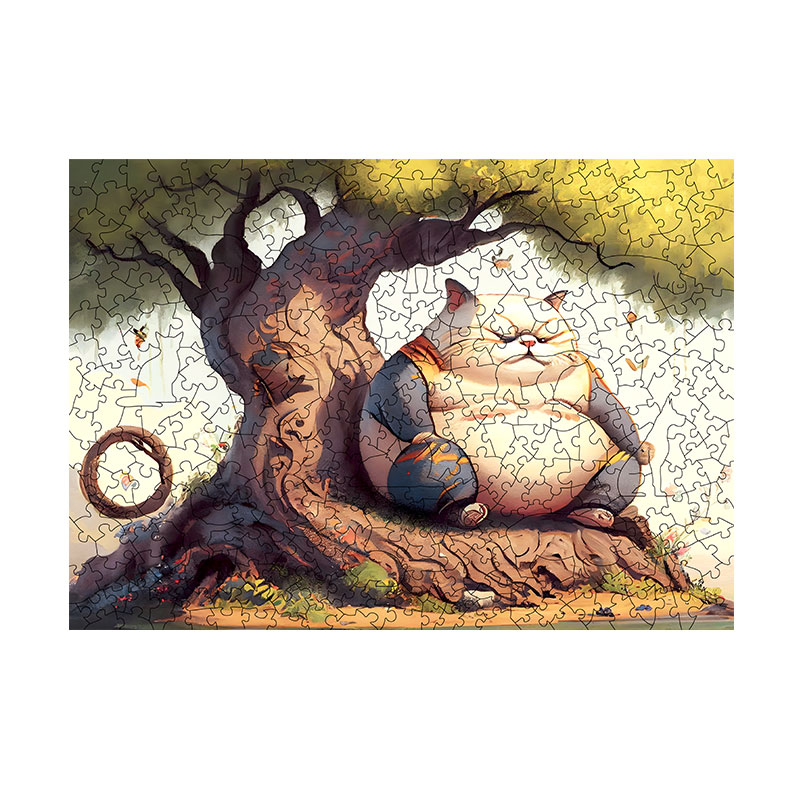
Adult puzzles often feature smaller and more intricate pieces, allowing manufacturers to create detailed images and more challenging assembly experiences.
Typical characteristics include:
Smaller interlocking pieces.
More complex and irregular piece shapes.
Detailed cutting patterns and image designs.
Higher piece counts for longer solving experiences.
2. Puzzle Difficulty and Piece Count
Difficulty is another important factor when developing wooden jigsaw puzzles for different age groups. Piece count is one consideration, but image complexity, shape variation, and overall puzzle structure also influence the challenge level.
Children's wooden puzzles generally focus on basic recognition, matching, and problem-solving. Products for toddlers may contain only a few large pieces, while puzzles for older children can include more pieces and increasingly detailed illustrations.
Adult wooden jigsaw puzzles often feature more complex patterns, detailed artwork, and higher piece counts. Some premium products also use irregularly shaped pieces, themed shapes, or intricate cutting patterns to create a more engaging experience.
For B2B buyers, offering different difficulty levels helps brands develop product collections for multiple age groups and retail price segments.
3. Materials and Safety Requirements
Material selection is important for both adult and children's wooden jigsaw puzzles, but children's products require particular attention to age-appropriate design and applicable toy safety requirements.
Material Considerations for Children's Puzzles
Wood quality: Select suitable wood materials with stable dimensions and consistent quality.
Surface finishing: Smooth surfaces and properly finished edges help reduce the risk of splinters.
Coatings and inks: Materials and finishes should meet the applicable safety requirements for the target market and age group.
Piece dimensions: Small-part and choking hazards must be assessed according to the intended age range and relevant regulations.
Material Considerations for Adult Puzzles
Adult wooden puzzles can place greater emphasis on visual detail, material appearance, precision cutting, and decorative presentation. Depending on the product positioning, manufacturers may use different wood types, printing techniques, and surface finishes.
Regardless of the target audience, buyers should confirm material specifications and relevant quality documentation before placing bulk orders.
4. Design Themes and Visual Styles
Design preferences often vary between children's and adult puzzle collections.
Popular Themes for Kids
Animals and wildlife.
Cartoon characters and fairy-tale scenes.
Vehicles and transportation.
Numbers, letters, and educational illustrations.
Nature, dinosaurs, and space exploration.
Popular Themes for Adults
Landscapes and famous architecture.
Artworks and cultural illustrations.
Nature, flowers, and wildlife.
Fantasy scenes and imaginative artwork.
Vintage illustrations and decorative patterns.
For brands and wholesalers, theme selection should consider regional preferences, seasonal demand, target customer groups, and product positioning.
5. Educational Value and Entertainment Experience
Children's wooden jigsaw puzzles are often designed to support learning through play. Depending on the child's age and the puzzle design, they can help develop hand-eye coordination, shape recognition, visual observation, and basic problem-solving skills.
Adult wooden jigsaw puzzles generally focus more on recreation, concentration, relaxation, and the satisfaction of completing a detailed image. Premium wooden puzzles can also serve as decorative products or collectible gifts.
These different product benefits give brands opportunities to create separate collections for educational toys, family entertainment, hobby products, and gift markets.
6. Packaging and Product Positioning
Packaging is another area where adult and children's wooden jigsaw puzzles may differ.
Children's puzzle packaging often emphasizes age recommendations, colorful illustrations, educational features, and product safety information. Packaging should also clearly communicate the intended age group and relevant warnings.
Adult puzzle packaging may focus more on artwork presentation, puzzle difficulty, piece count, product quality, and gift appeal. Premium packaging can add value to products positioned for holiday gifts, collectibles, and specialty retail channels.
For OEM buyers, customized packaging, product labels, inserts, and barcode requirements should be confirmed during the product development stage.
7. Adult vs. Kids Wooden Jigsaw Puzzles: Quick Comparison
| Features | Kids Puzzles | Adult Puzzles |
|---|---|---|
| Piece Size | Generally larger | Generally smaller |
| Difficulty | Simple to moderate | Moderate to advanced |
| Piece Count | Usually lower for younger ages | Often higher |
| Design Themes | Animals, cartoons, education | Art, landscapes, intricate patterns |
| Main Focus | Learning and play | Recreation and challenge |
| Safety Priorities | Age-appropriate design and toy safety | Material and product quality |
| Packaging | Educational and colorful | Artwork and gift presentation |
8. What Should Buyers Consider When Sourcing Wooden Jigsaw Puzzles?
For wholesalers, toy brands, gift companies, and retailers, choosing the right wooden jigsaw puzzle manufacturer requires evaluating more than product appearance.
Product range: Check whether the supplier offers puzzles for different age groups and difficulty levels.
Material selection: Confirm wood specifications, surface finishing, and applicable material documentation.
Cutting precision: Evaluate piece fitting, edge quality, and dimensional consistency.
Printing quality: Review image clarity, color consistency, and surface durability.
Customization: Discuss custom artwork, piece counts, puzzle dimensions, shapes, and packaging.
Production capacity: Confirm MOQ, sample lead time, mass production lead time, and repeat-order support.
Working with an experienced custom wooden jigsaw puzzle manufacturer can help buyers develop products that meet their target market requirements while maintaining consistent quality across bulk orders.
Conclusion
Adult and kids wooden jigsaw puzzles differ in piece size, difficulty, design themes, educational focus, and packaging requirements. Children's products generally prioritize age-appropriate handling and learning experiences, while adult products often focus on detailed artwork, intricate cutting patterns, and challenging assembly.
For B2B buyers, understanding these differences helps build a more targeted product portfolio and select suitable specifications for different markets. Material quality, production precision, customization capabilities, and quality control should all be considered when choosing a long-term manufacturing partner.
Looking for a reliable wooden jigsaw puzzle manufacturer? Contact our team to discuss custom designs, OEM/ODM services, and wholesale purchasing requirements.
Frequently Asked Questions
1. What is the main difference between adult and kids wooden jigsaw puzzles?
The main differences include piece size, difficulty, image complexity, and intended use. Children's puzzles generally feature larger pieces and simpler designs, while adult puzzles often include smaller pieces and more intricate patterns.
2. Are wooden jigsaw puzzles suitable for young children?
Yes, when they are specifically designed for the intended age group. Buyers should check piece dimensions, material safety, finishing quality, and applicable toy safety requirements before sourcing children's puzzles.
3. What materials are commonly used in wooden jigsaw puzzles?
Common materials include plywood and other engineered wood products. The exact choice depends on the product design, thickness, cutting requirements, surface finish, and target market.
4. Can manufacturers customize wooden jigsaw puzzles for different age groups?
Yes. Depending on manufacturing capabilities, customization may include piece size, piece count, puzzle shapes, artwork, dimensions, packaging, and product specifications.
5. What should wholesalers consider when purchasing wooden jigsaw puzzles?
Wholesalers should evaluate material quality, cutting precision, printing consistency, customization options, MOQ, production lead time, and relevant safety documentation for the target market.