

 English
Custom 3D Wooden Puzzles allow wholesalers, importers, gift companies, retailers, and private label brands to develop products that match their target markets. However, a successful customization project requires more than selecting a model and adding a logo. Design feasibility, material specifications, sampling, packaging, intellectual property, and production planning all need to be confirmed before an order is placed.
For buyers sourcing custom 3D Wooden Puzzles, the following guide explains the key decisions to make before working with an OEM wooden puzzle manufacturer or an ODM wooden puzzle supplier.
1. Define Your Product Design and Target Market
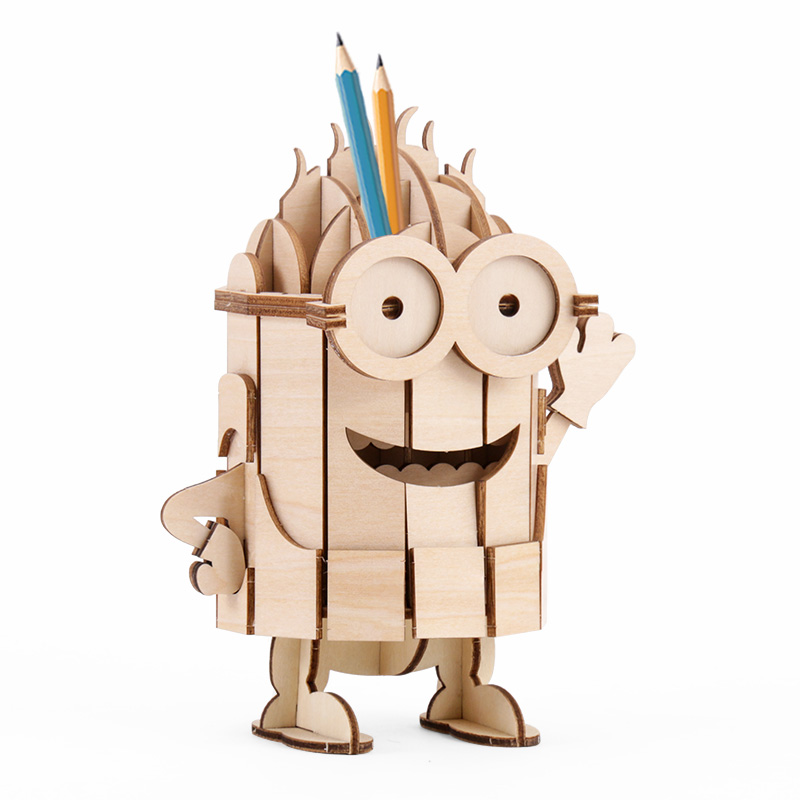
Start by identifying the type of product you want to develop. Architectural models, decorative objects, mechanical structures, and other themed 3D wooden model kits may have different design requirements and production considerations.
Before contacting a custom wooden puzzle manufacturer, prepare reference images, sketches, existing samples, or design files if available. It is also useful to specify the target audience, intended retail price range, approximate assembled dimensions, and expected level of assembly complexity.
These details help the manufacturer evaluate the design and identify questions that need to be resolved before sampling.
2. Confirm the Material and Product Specifications
Material selection can affect the appearance, component structure, cutting process, and assembly performance of a 3d wooden puzzle kit. Our primary material is New Zealand-imported medium-density fiberboard (MDF), which offers a relatively uniform surface and consistent structure for detailed laser-cut components.
Buyers should confirm the material specification, thickness, surface finish, assembled dimensions, component requirements, and any special functional or decorative features before approving a sample.
For additional information, see our guide to 3D wooden puzzle materials and manufacturing.
3. Decide Between OEM and ODM Customization
Understanding the difference between OEM and ODM can help buyers choose the right development approach.
OEM: Customize an Existing Product or Specification
OEM projects are suitable when a buyer has defined product requirements or wants to use an established design with agreed branding and packaging changes. The project scope may include logo placement, instruction materials, and customized retail packaging.
ODM: Develop a New Product
ODM projects may involve new design development, structural evaluation, sample production, testing, and revisions. Development costs, sampling arrangements, production quantities, lead times, and deliverables should be confirmed before the project begins.
For private label wooden puzzles, buyers should also clarify whether the customization involves branding only or a more extensive product development process.
4. Confirm MOQ and Order Quantities by SKU
MOQ depends on the selected SKU, stock availability, customization method, and packaging requirements. A standard stock order, a branded order, and a new development project may have different purchasing conditions.
For bulk wooden puzzle orders, provide the expected quantity for each model rather than only the total order quantity. If you plan to mix several models, ask the supplier to confirm the MOQ and applicable price for each SKU.
This is particularly important for 3D wooden puzzle wholesale programs that include multiple designs, packaging formats, or market-specific variations.
5. Review Samples Before Mass Production
Sampling gives buyers an opportunity to evaluate the actual product before confirming a larger order. Depending on the project, the review may cover:
Material appearance and component quality.
Assembly fit and structural stability.
Product dimensions and component quantity.
Instruction clarity and language requirements.
Logo placement and packaging presentation.
Any agreed product-specific inspection criteria.
Samples are available for evaluation. Sample charges, shipping costs, and any possible deduction against a subsequent bulk order must be confirmed individually. For new OEM/ODM wooden puzzle development, the number of revisions and approval process should also be agreed in advance.
6. Choose the Right Packaging for Your Sales Channel
Packaging requirements differ between online retailers, gift distributors, specialty stores, and other sales channels. A suitable package should reflect the product's presentation requirements while also considering protection, carton dimensions, and transportation.
Depending on the selected SKU and order requirements, options may include white boxes, color boxes, branded packaging, and customized printed materials. Not every option is a standard inclusion, so buyers should confirm the available formats and costs before placing an order.
For accurate logistics planning, request the assembled dimensions, packaging dimensions, unit weight, units per carton, and carton specifications. These details are particularly useful for wooden puzzle wholesale suppliers and international distributors.
7. Confirm Lead Time and Delivery Requirements
Our general lead-time guidance is approximately 5–7 days for existing-stock products and 15–25 days for customized products. Actual timing depends on SKU availability, customization scope, order quantity, artwork approval, and production scheduling.
For a new design, clarify whether the estimated timeline includes development, sample revisions, approval, and mass production. If your order is linked to a product launch, retail promotion, or seasonal sales period, communicate the required delivery date as early as possible.
8. Clarify Copyright, Confidentiality, and Design Files
Intellectual-property arrangements should be discussed before a custom product enters development. Our existing products are independently designed by our company, and their copyrights belong to us.
For customized designs, ownership is agreed with the customer. Source files are not routinely provided under our current policy. We can discuss confidentiality agreements and commit to protecting custom files according to the agreed project terms.
Before development starts, both parties should document design ownership, permitted use, confidentiality obligations, and the agreed deliverables. This is especially important for private label wooden puzzle manufacturers working with brands that require exclusive designs.
9. Prepare a Complete Customization Brief
To help your 3D wooden puzzle supplier assess a project efficiently, prepare the following information:
Reference images, drawings, or design files.
Target product dimensions and material requirements.
Estimated quantities for each SKU.
Logo files, packaging artwork, and instruction language.
Destination market and applicable product documentation.
Required sample approval date and target delivery date.
Packaging and carton requirements.
Design ownership and confidentiality expectations.
For a more complete supplier assessment, read how to choose a reliable 3D wooden puzzle manufacturer. You can also review the factors affecting 3D wooden puzzle costs to understand the details that may influence a quotation.
Frequently Asked Questions
Q1: What is the MOQ for custom 3D wooden puzzles? Can I mix different models?
MOQ depends on the SKU, stock availability, customization method, and packaging requirements. Mixed-SKU orders can be evaluated, but each model may have different minimum quantities. Please provide the model numbers and quantities for confirmation.
Q2: Can you customize the logo and retail packaging?
Yes. Logo and branded packaging options can be discussed according to the product, artwork, order quantity, and packaging requirements. The available options, additional costs, and applicable minimum quantities are confirmed individually.
Q3: Do you provide OEM and ODM services?
Yes. OEM projects based on agreed specifications and ODM projects involving new product development can be evaluated. Development fees, sampling, mass production, lead times, and deliverables are confirmed for each project.
Q4: How long does a custom wooden puzzle order take?
Customized products generally require approximately 15–25 days. New development, sample revisions, artwork approval, special requirements, and production scheduling may affect the actual timeline. Please confirm the schedule for your specific project.
Q5: Can I purchase samples before placing a bulk order?
Yes. Samples are available for evaluation. Sample fees, shipping costs, and any possible deduction against a bulk order need to be confirmed individually.
Q6: Can you provide product specifications and carton information?
Yes. Available information can be organized by SKU, including assembled dimensions, packaging dimensions, unit weight, units per carton, and carton specifications.
Q7: Who owns the copyright of a customized wooden puzzle?
Ownership of custom designs is agreed with the customer. Our existing designs remain our property. Source files are not routinely provided under our current policy, but confidentiality agreements can be discussed and agreed terms will apply.
Q8: Can you provide product photos, videos, and sales materials?
Yes. We have product information packages available, including relevant photos, videos, and product materials. Please identify the models you are interested in so the appropriate files can be provided.
Start Your Custom 3D Wooden Puzzle Project
Whether you are developing a private label collection, sourcing products for wholesale distribution, or evaluating a new OEM/ODM design, early communication helps establish clear expectations for specifications, samples, costs, and production.
Send us your reference design, target quantities, packaging preferences, and destination market. Our team can review your requirements and discuss a suitable manufacturing plan.
Explore Our 3D Wooden Puzzle Products | Discuss Your Custom Project